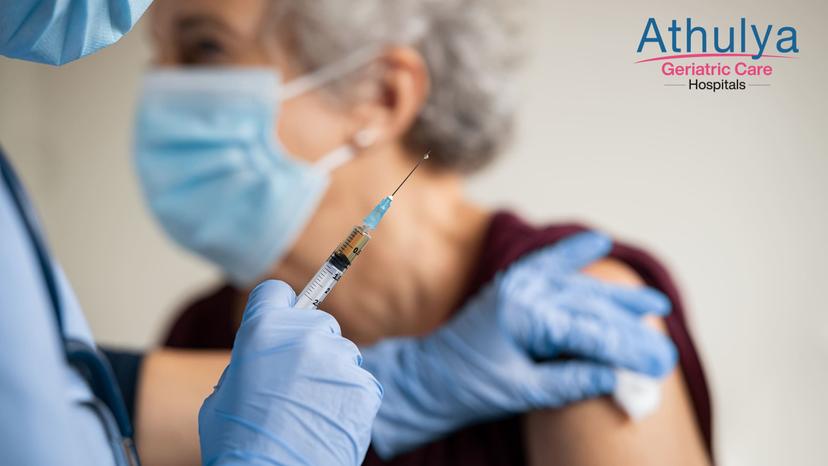
Vaccination is an important part of preventive healthcare for older adults, helping reduce the risk of certain infections and their complications. However, seniors and their families may have concerns about side effects after receiving a vaccine. Understanding which reactions are expected and which require medical attention can help families respond confidently.
Common vaccine side effects in seniors are usually mild and temporary. However, age-related health changes, existing medical conditions and certain medications may influence an individual’s healthcare needs. At Athulya Geriatric Care Hospitals, informed preventive care is an important part of supporting senior health and well-being.
What Are the Common Vaccine Side Effects in Seniors?
Most vaccine side effects occur as the immune system responds to vaccination. They generally improve within a few days without requiring specific treatment.
Common reactions include:
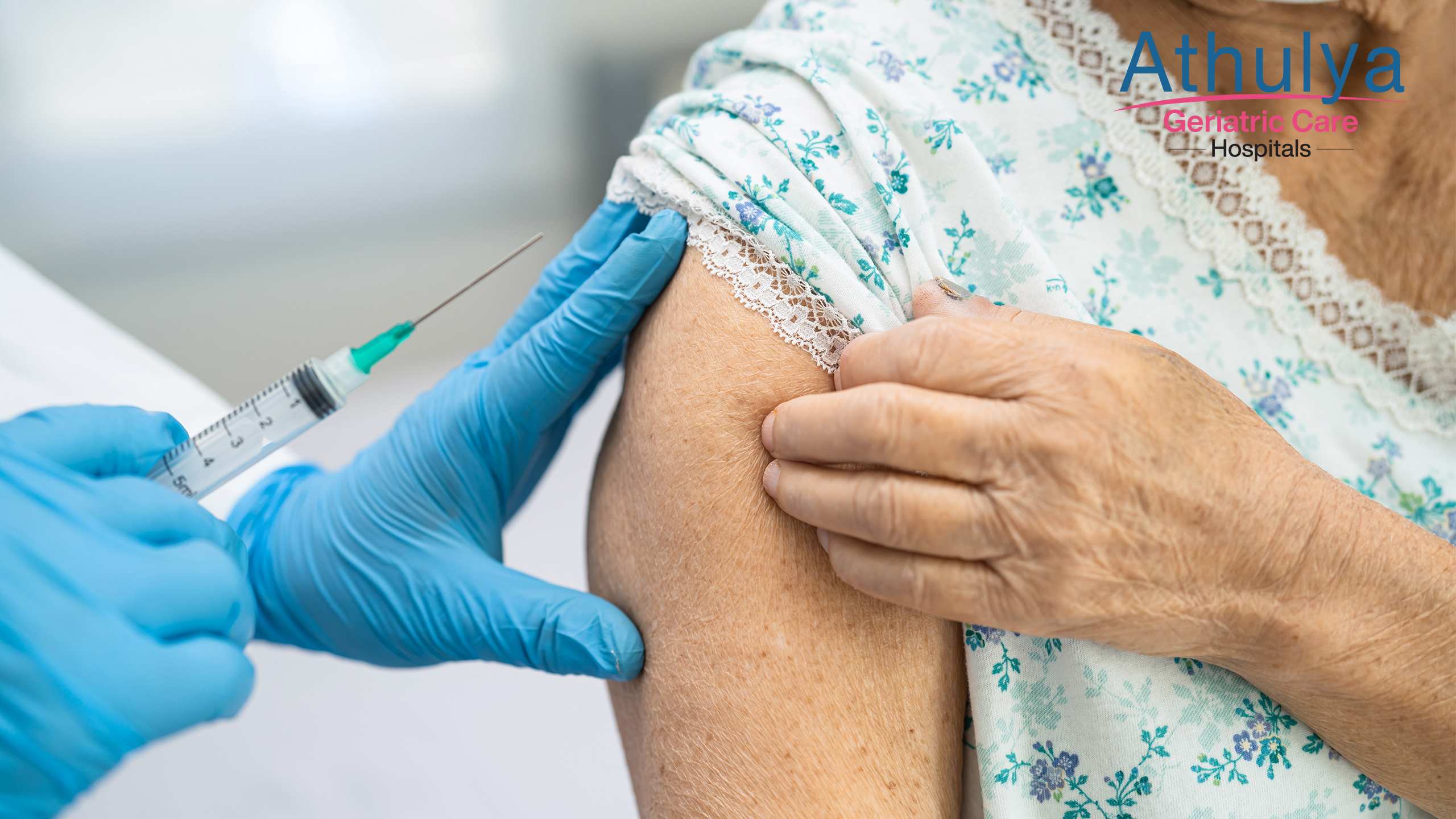
- Injection-site pain: Mild soreness, redness or swelling where the vaccine was administered.
- Fatigue: Temporary tiredness or reduced energy levels.
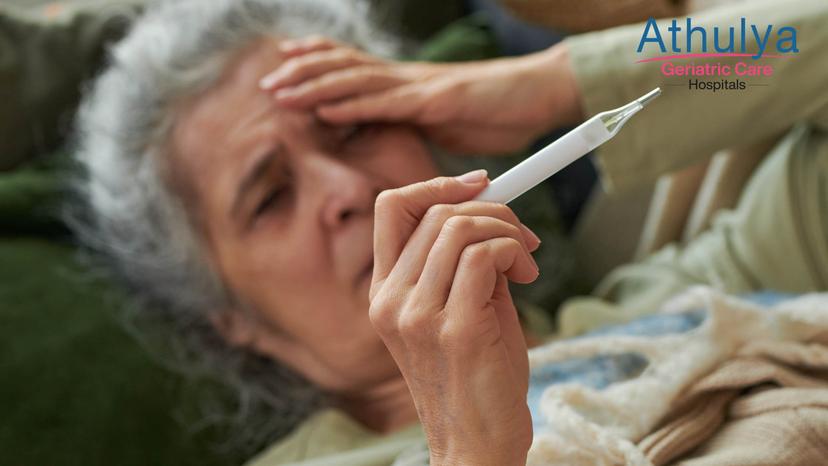
- Mild fever: A slight increase in body temperature that usually settles on its own.
- Headache: Mild discomfort that resolves with time.
- Muscle aches: Temporary body pain or soreness.
- Chills: A short period of feeling cold or shivery after vaccination.
These reactions do not necessarily indicate that something is wrong. However, seniors should monitor their symptoms and seek medical advice if they worsen or persist.
Why Might Seniors Experience Vaccine Side Effects
Vaccine reactions vary from person to person. Some older adults experience no noticeable side effects, while others may feel tired or develop mild soreness or fever.
Existing health conditions, the type of vaccine, previous reactions and individual immune responses can influence how a person feels after vaccination. Seniors managing chronic conditions should discuss any concerns with their doctor before receiving a vaccine.
At Athulya Geriatric Care Hospitals, considering an older adult’s medical history and overall health is important when discussing vaccination and preventive healthcare.
How Can Seniors Manage Mild Side Effects?
Simple measures can help seniors feel more comfortable after vaccination:
- Rest
- Hydration
- Cold compress
- Gentle movement
- Medical guidance
Most mild reactions improve within a few days. Seniors should continue their usual medical care and follow any specific instructions provided by their healthcare professional.
Also Read: Beyond Physical Health: Why Mental Health and Well-being Are Essential to Healthy Ageing
When Should Seniors Seek Medical Help?
Although serious reactions are rare, recognizing warning signs is important.
Seek emergency medical attention if a senior develops difficulty breathing, swelling of the face or throat, widespread hives accompanied by other symptoms, severe dizziness or collapse. These may indicate a serious allergic reaction.
Contact a healthcare professional promptly if the senior experiences:
- High or persistent fever.
- Severe or worsening pain or swelling.
- Symptoms that are not improving after a few days.
- New confusion, unusual drowsiness or significant weakness.
- Any symptom that is unusual or concerning, particularly in someone with existing medical conditions.
Do not assume that every new symptom is caused by a vaccine. A medical assessment can help identify the cause and determine whether treatment is needed.
Supporting Safe Vaccination and Healthy Ageing
At Athulya Geriatric Care Hospitals, preventive healthcare involves considering the individual needs of older adults, including their medical history, chronic conditions and ongoing treatments. Discussing potential vaccine reactions before vaccination can help seniors and caregivers understand what to expect and when to seek assistance.
Regular health assessments and appropriate medical guidance help families make informed decisions about immunisation and other preventive measures. With the right information and timely medical support, seniors can approach vaccination with greater confidence.
Conclusion
Most vaccine side effects in seniors are mild and temporary, but recognising warning signs is essential. Understanding expected reactions, following appropriate aftercare and seeking medical attention when necessary can help older adults receive vaccines more confidently. With informed preventive care and professional medical guidance, seniors can take positive steps towards healthier ageing.
Frequently Asked Questions
1. How long do vaccine side effects usually last in seniors?
Most mild side effects improve within one to three days, although the duration can vary depending on the vaccine and individual response.
2. Is mild fever normal after vaccination in older adults?
Yes, a mild fever can occur temporarily. Seek medical advice if it is high, persistent or accompanied by concerning symptoms.
3. When should swelling at the injection site be checked by a doctor?
Seek medical advice if swelling becomes severe, continues to worsen, or is accompanied by significant pain or other concerning symptoms.
4. Can vaccine side effects worsen existing health conditions?
Most side effects are temporary, but symptoms such as significant weakness or changes in blood sugar may require attention in some seniors.
5. Are serious allergic reactions after vaccination common in seniors?
No. Serious allergic reactions are rare. However, breathing difficulty, throat swelling or collapse requires immediate emergency medical attention.
6. Is it normal to have arm pain after a vaccine?
Yes. Mild pain, redness or swelling at the injection site is common and generally resolves within a few days.